Journal · Jun 2, 2026
Winter Chain Storage — How to Prevent Rust and Keep Your Edge
End-of-season chain care that prevents rust, preserves your edge, and saves you from buying a new chain every spring.
Published
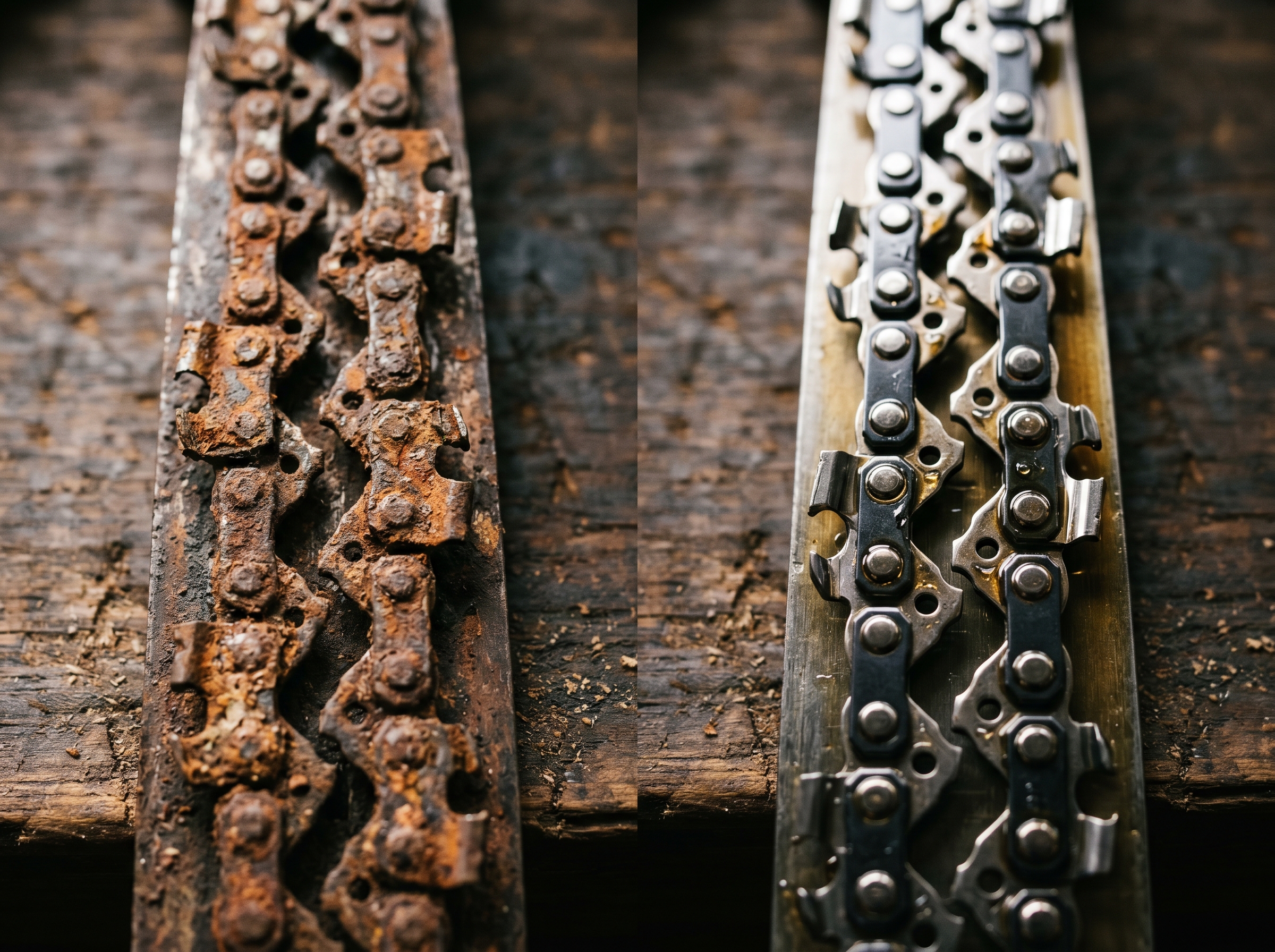
Most chainsaw owners clean their saw before winter storage. Fewer pay the same attention to the chain. That oversight costs real money. A chain that sits through four or five months of garage humidity will come out with surface rust on every cutter, stiff tie straps, and an edge that needs serious work before the first spring cut. A few minutes of end-of-season prep avoids all of it.
Why chains rust over winter
Steel rusts when moisture sits on bare metal. That sounds obvious, but garage and shed environments are worse than most people realize. Unheated garages swing through temperature cycles that create condensation on metal surfaces, especially overnight. A chain tossed into a drawer or left on the bar through winter collects moisture from the air and holds it in every rivet, tie strap gap, and cutter gullet.
Bar oil residue helps for a while, but the thin film left from a day of cutting is not a long-term rust preventive. It dries, collects dust, and breaks down within a few weeks. Without deliberate protection, the chain starts developing surface corrosion well before spring.
End-of-season cleaning
Before storing a chain, clean it properly. This does not require anything expensive.
Step one: remove the chain from the bar. Storing the chain on the bar invites corrosion in the bar groove, and it keeps tension on the chain for months, which is unnecessary wear on the drive links and bar nose.
Step two: soak and scrub. Drop the chain into a container of mineral spirits, diesel fuel, or a commercial chain cleaner for 15 to 20 minutes. Then use a stiff nylon brush to scrub out the sawdust, sap, and bar oil residue packed between the drive links. Pay attention to the area around the rivets and depth gauges, where gunk accumulates the most.
Step three: dry the chain completely. Hang it or lay it flat on a clean rag. Do not skip this step. Any trapped moisture from the cleaning process is the exact thing you are trying to avoid during storage.
Applying a rust preventive
Once the chain is clean and dry, apply a protective coating. You have a few options:
- Bar and chain oil applied by hand. Wipe a light coat over the entire chain. This is the simplest approach and works well for garage storage. Use a rag to work the oil into the links.
- WD-40 or a similar moisture-displacing spray. Good for pushing out any remaining moisture and leaving a protective film. Spray liberally, let it drip, then hang the chain to dry. Note: this is not a lubricant for cutting, just storage protection.
- Light machine oil or 3-in-1 oil. A thin coat applied with a rag gives solid rust protection for months.
The goal is to leave a continuous oil film on every metal surface. Bare steel exposed to humid air will rust. Coated steel will not.
Storage method matters
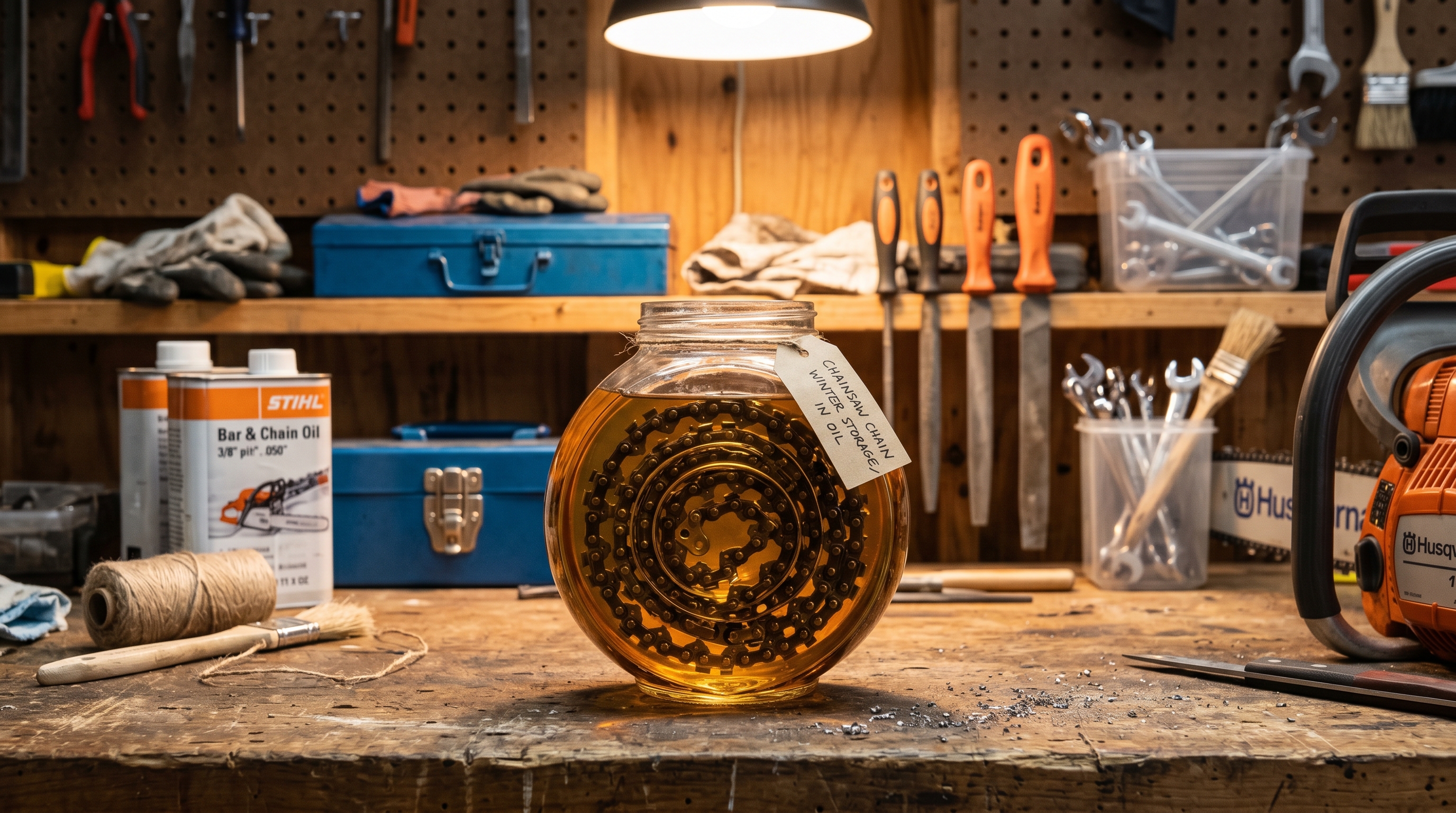
After oiling, store the chain in a sealed or semi-sealed container. A zip-lock bag works. A plastic container with a lid works. Even wrapping the chain in an oiled rag and placing it in a coffee can is better than leaving it exposed on a shelf.
Avoid storing chains in cardboard boxes or paper bags. Both absorb moisture from the air and hold it against the chain. Metal toolboxes are fine as long as they close, but plastic bins are better in damp environments because they do not conduct temperature swings as readily.
If you store multiple chains, label each one with the pitch, gauge, drive link count, and the saw it fits. A piece of masking tape and a marker saves the guessing game in April.
Spring inspection before the first cut
Even with proper storage, inspect the chain before mounting it in spring.
Check for rust. Light surface discoloration is normal and usually comes off with a few passes of a file during sharpening. Heavy rust or pitting on the cutter edges means the chain has lost metal and may not sharpen back to a consistent profile. If the cutters are pitted or the tie straps feel stiff and gritty even after oiling, it is time for a replacement.
Check for stiff links. Flex the chain by hand. Every link should pivot freely. A stiff link, sometimes called a tight joint, will cause the chain to jump or bind on the bar nose sprocket. Stiff links can sometimes be freed with penetrating oil and manual flexing, but if more than one or two are frozen, replace the chain.
Sharpen before cutting. Even a chain stored in perfect condition benefits from a light touch-up before the first cut of the season. A few passes with the correct round file on each cutter restores a clean edge and gives you a baseline for the rest of the year. For a full walkthrough, see our how to sharpen a chainsaw chain guide.
The cost of skipping storage prep
A decent replacement chain runs $15 to $35 depending on pitch and gauge. If you skip winter prep and the chain comes out rusted, stiff, or with damaged edges, that is the price of a new one — every year. Spending five minutes on cleaning and oiling at the end of the season protects the investment and means your saw is ready to cut the first time you need it.
If you are debating whether a stored chain is still worth sharpening or if it is time to replace, the sharpen or replace cost guide breaks down the math in detail.
Take care of your chains in November, and they will take care of you in March.
Find the right part on Amazon
Check price, stock and fitment — ships direct from Amazon.
Parts