Journal · Jun 2, 2026
Clearing Storm Damage — Which Chain to Run on Dirty, Unpredictable Wood
Storm-downed trees are full of mud, gravel, and hidden metal. Here is which chain type survives the job and which one dulls in minutes.
Published
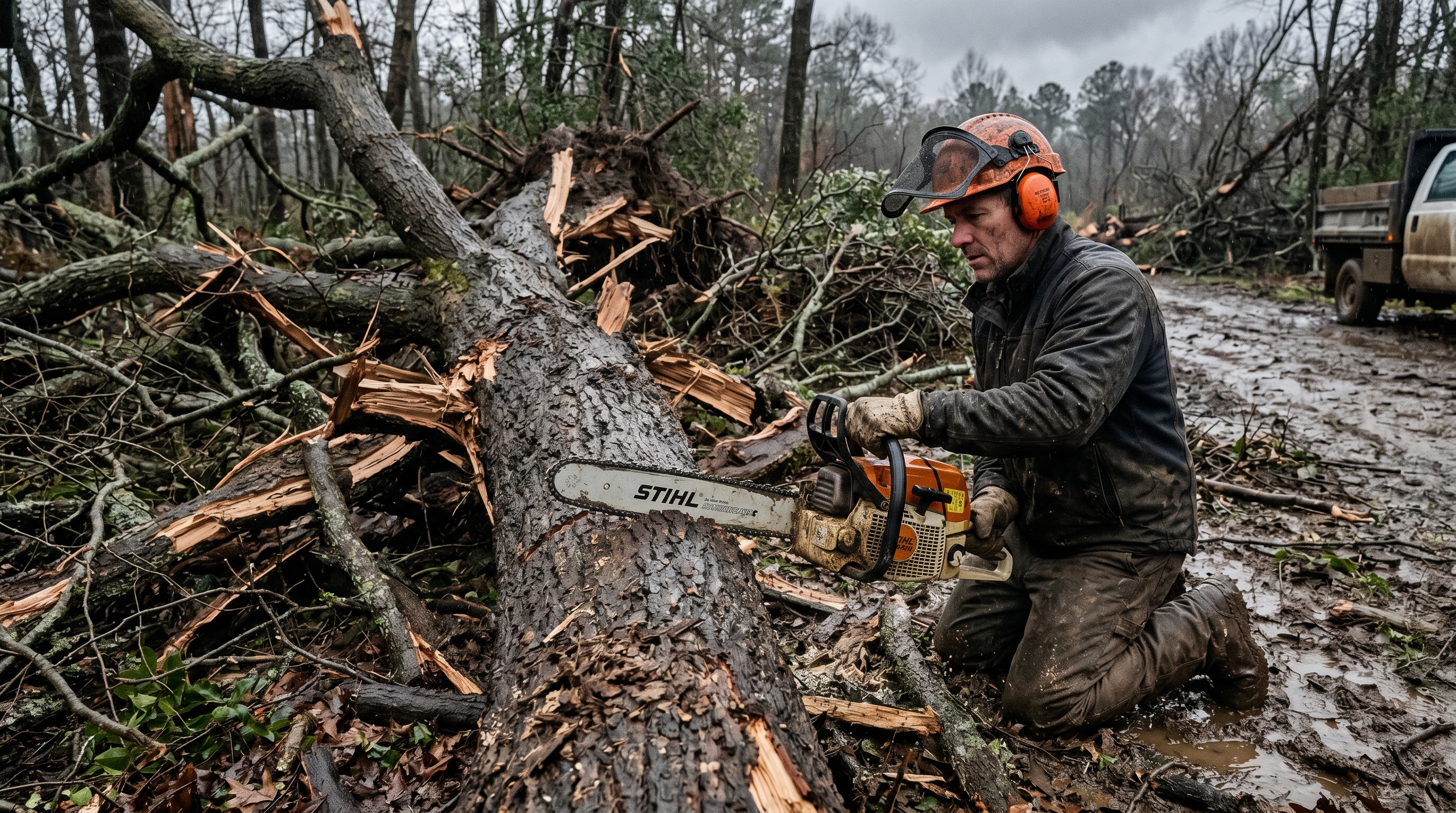
A tree standing in your yard is clean wood. The same tree on the ground after a storm is a completely different cutting problem. It has been dragged through dirt, driven into soil, wrapped around fence wire, and buried under other debris. The bark is packed with mud and gravel. There may be nails, staples, or old fencing wire embedded in the trunk from decades ago that you cannot see until the chain hits them.
This is the reality of storm cleanup cutting, and it changes everything about which chain you should be running.
Why storm wood is hard on chains
During normal cutting, the biggest threats to your chain are occasional dirt contact, a glancing touch on the ground, or dry hardwood that wears cutters faster than green softwood. Those are manageable. You sharpen, adjust, and keep going.
Storm-downed wood stacks multiple problems at once:
- Mud and grit in the bark. A tree that fell and slid across the ground has abrasive material packed into every crack in the bark. Every cut through the bark layer is essentially cutting through sandpaper.
- Gravel and soil contact. Downed limbs and trunks lying on the ground are partially buried. Cutting near ground level means the chain will likely contact soil or gravel, which destroys edges instantly.
- Hidden metal. Old fence staples, wire, nails from tree stands or birdhouses, and even metal signage bolted into trees years ago are common finds in storm cleanup. You often do not know they are there until the chain hits something hard and stops cutting.
- Unpredictable tension in the wood. A downed tree is under stress from its own weight, leaning limbs, and whatever it fell on. The wood can shift, pinch the bar, or spring when a cut releases tension. This does not directly dull the chain, but it increases the chance of bar damage, chain derailment, and cuts that go sideways.
Semi-chisel is the right call for storm cleanup
This is where cutter geometry makes a measurable difference. For a detailed breakdown of the two main profiles, see full chisel vs. semi-chisel chain. Here is how that choice plays out in storm conditions.
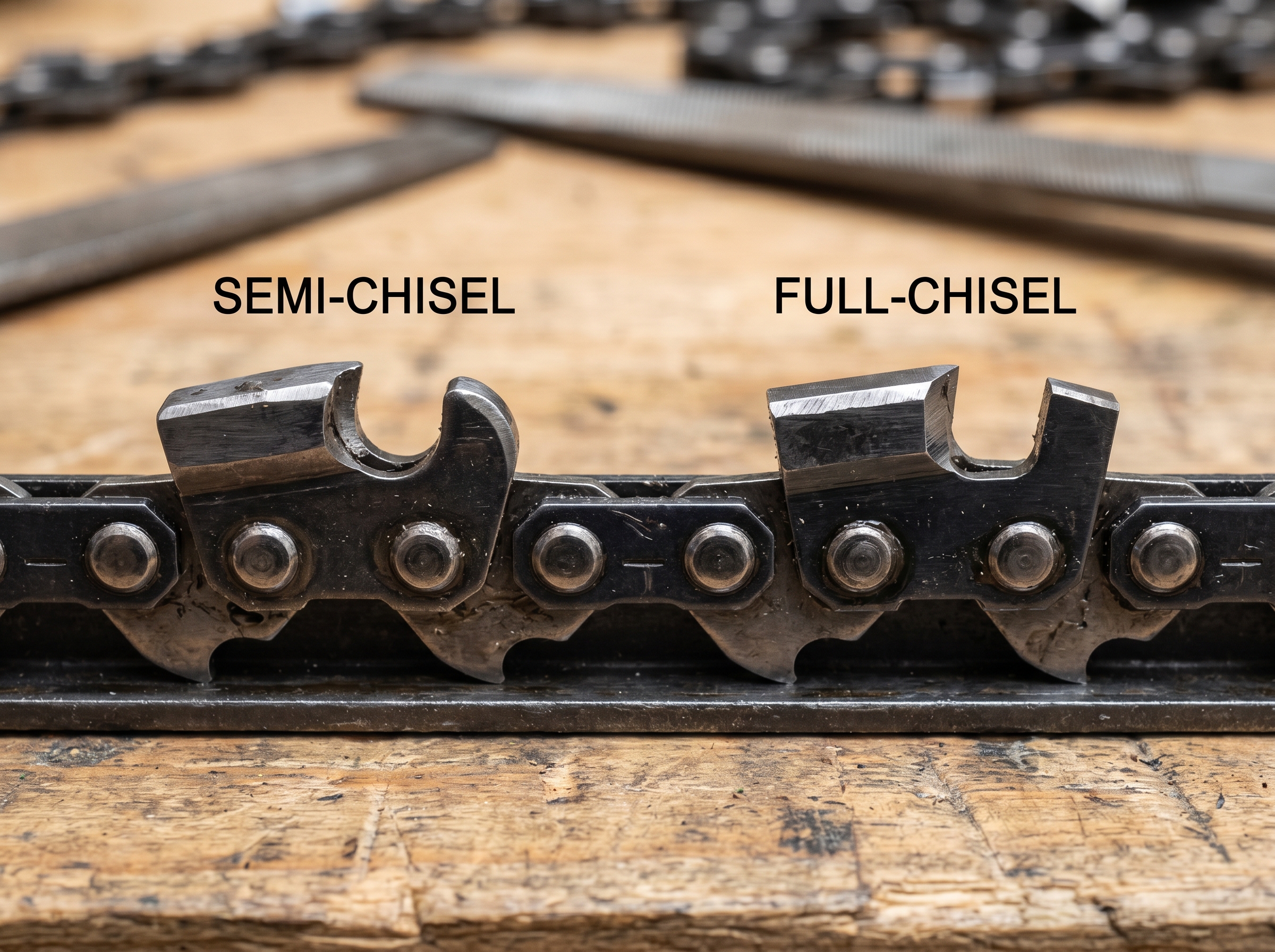
Full chisel chains have a square corner on the cutter. That sharp, angular edge cuts fast in clean wood, but it is extremely fragile in dirty conditions. One pass through muddy bark rounds over the corners. A single contact with gravel or a buried nail can ruin multiple cutters. In storm cleanup, a full chisel chain can go from sharp to useless in a matter of minutes.
Semi-chisel chains have a rounded cutter corner. That radius is inherently more durable against abrasive material. Dirt, grit, and bark debris wear down a semi-chisel chain much more slowly. It will not cut quite as fast as full chisel in perfect conditions, but in storm wood, it holds an edge dramatically longer, which means less time sharpening and more time actually clearing debris.
For storm cleanup, semi-chisel is the default answer. The speed difference is irrelevant when the alternative is stopping every few cuts to file a destroyed full chisel chain.
Keep a spare chain on hand
Storm cleanup is unpredictable, and even a semi-chisel chain will eventually dull or hit something that damages it beyond quick field sharpening. The single most useful thing you can do before heading out to clear storm damage is put a spare chain in your pocket or toolbox.
Swapping to a fresh chain takes two to three minutes with basic tools. Trying to cut with a dull chain wastes time, burns through fuel or battery charge, and puts unnecessary stress on the bar and drive sprocket. If you are not sure how to swap chains quickly, the how to install a new chainsaw chain guide walks through it step by step.
A good practice for regular storm-season preparedness: keep at least two chains matched to your saw. Run one until it dulls, swap in the spare, and sharpen the first one later at the workbench when you have good light and a proper vise.
Field sharpening vs. swapping
If you are comfortable with a round file and can touch up cutters in the field, you can extend a chain’s working life during a storm cleanup session. But field sharpening has limits. A few passes per cutter to restore an edge after normal dulling is reasonable. Trying to repair a chain that hit a nail or dragged through gravel is not practical in the field. The cutters will be unevenly damaged, and restoring them to a consistent profile requires a bench grinder or a careful hand filing session at home.
The rule of thumb: if the chain is dull but the cutters look intact, sharpen it in the field. If cutters are chipped, uneven, or visibly damaged, swap to the spare and deal with the damaged chain later.
Other storm cleanup tips
Cut above the ground whenever possible. Roll or lever the trunk up onto a sacrificial log or use a cant hook to lift it. Every inch of clearance between the chain and the soil reduces the chance of ground contact.
Watch for tension in the wood. Downed trees store enormous energy. Cut from the compression side first when possible, and be ready for the wood to shift. A pinched bar is annoying. A log that springs when the tension releases is dangerous.
Run a shorter bar if you have one. Storm cleanup usually involves cutting limbs and moderate-diameter trunks, not milling large timber. A shorter bar is lighter, easier to control in awkward positions, and less likely to catch on debris.
Check your chain tension frequently. Dirty cutting conditions cause more heat and debris buildup, which accelerates chain stretch. Retension every few cuts, especially if the chain starts throwing more sawdust than chips.
Storm cleanup is hard on equipment. Accept that going in, run the right chain for the job, keep a spare ready, and you will clear the mess efficiently without burning through chains faster than you need to.
Find the right part on Amazon
Check price, stock and fitment — ships direct from Amazon.
Parts