Journal · Jun 2, 2026
Best Replacement Chain for Battery Chainsaws in 2026 — Buyer's Guide
Battery chainsaws have different chain requirements than gas models. This guide covers which chain types perform best on electric saws and common fitment mistakes.
Published
Best Replacement Chain for Battery Chainsaws in 2026 — Buyer’s Guide
Battery chainsaws have gone from light-duty novelty to serious homeowner tool. In 2026, today’s cordless saws from EGO, DeWalt, Milwaukee, Stihl, Husqvarna, Ryobi, and Greenworks are powerful enough for storm cleanup, pruning, bucking firewood, and routine property maintenance. But one thing still catches many owners off guard: choosing the right replacement chain.
A battery chainsaw is not just a gas saw without a fuel tank. It cuts differently, delivers power differently, and responds differently to chain design. That means the best replacement chain for a cordless saw is usually not the most aggressive chain on the shelf. For most homeowners, the smartest choice is a chain that balances cutting speed, edge retention, smooth operation, and battery efficiency.
Battery chainsaws need different chain considerations than gas saws
The biggest mistake buyers make is assuming any matching chain will perform the same. It won’t. Battery saws have different operating characteristics, and the chain matters more because the power system is less forgiving.
Compared with gas chainsaws, battery models usually have lower peak torque, even if they feel strong in typical cutting. They also deliver power in a very consistent way. Instead of revving up and surging through a cut like a gas engine, an electric motor tends to hold a more stable RPM until the load becomes too great. That smooth power delivery is great for control, but it also means chain drag, cutter shape, and sharpness have a direct effect on performance.
Battery drain is another major factor. A chain that cuts efficiently helps the motor work less, which translates into longer runtime per charge. A chain that is too aggressive, too heavy, too wide for the application, or simply dull can make the saw feel underpowered and empty the battery much faster.
In short, the ideal battery chainsaw chain is usually one that cuts cleanly with low resistance, stays sharp in real homeowner conditions, and doesn’t ask the motor for more than it can comfortably deliver.
The major battery chainsaw platforms in 2026
The cordless chainsaw market in 2026 is led by a few major platforms, each with multiple saw sizes and bar lengths. Homeowners shopping for replacement chains will most often be replacing chains on:
- EGO 56V
- DeWalt 60V FlexVolt
- Milwaukee M18 FUEL
- Stihl MSA series
- Husqvarna battery chainsaws
- Ryobi 40V
- Greenworks 80V
These brands cover everything from compact pruning saws to larger 16-inch, 18-inch, and even 20-inch homeowner models. While bar length varies, chain selection usually comes down to a few common formats rather than dozens of exotic combinations.
The most common chain specs on battery chainsaws
Across the battery chainsaw category, two chain types dominate in 2026:
- 3/8” low profile, .043” gauge — most common on compact and mid-size saws
- 3/8” low profile, .050” gauge — common on larger or more powerful battery saws
That is good news for buyers because the market has standardized around these specs. “3/8 LP” refers to pitch, while .043 and .050 refer to gauge, or the thickness of the drive links that fit into the bar groove.
Many homeowners know their bar length but not their pitch, gauge, or drive link count. Unfortunately, bar length alone is not enough to choose a chain. Two 14-inch saws can use completely different chains. Even within one brand, a 16-inch model may be offered with different gauge or drive link combinations depending on the bar and production run.
Semi-chisel vs full chisel for battery saws
If you own a battery chainsaw, this is the most useful rule of thumb in the entire category: semi-chisel usually beats full chisel.
Full-chisel chains have square-cornered cutters that can be very fast in clean wood, especially in powerful saws. But they dull faster, are less tolerant of dirt and bark contamination, and can create more cutting resistance once the edge is no longer perfect.
Semi-chisel chains have rounded cutter corners. In real homeowner use, that usually makes them the better choice. They stay sharp longer, handle imperfect wood better, and maintain smoother cutting with less strain on the motor. For a battery chainsaw, that often means more consistent performance and less battery drain over time.
For most cordless saw owners, semi-chisel offers the best real-world value. You may give up a little peak cutting aggression on fresh, clean timber, but you gain edge life, easier control, and more efficient use of each battery charge.
Low-kickback chains: should you stay with them?
Most battery chainsaws sold to homeowners come with reduced-kickback or low-kickback chains from the factory. That is not an accident. Battery saws are often marketed to casual or occasional users, and manufacturers prioritize safety and smooth handling.
Should you stick with a low-kickback replacement chain? In most cases, yes.
A quality low-kickback chain is usually the right fit for homeowner battery saw use. It offers predictable cutting, works well with the power characteristics of cordless saws, and aligns with the bar and safety setup the saw was designed around. Unless you are a very experienced user with a specific reason to change chain style, staying with a reduced-kickback profile is the sensible choice.
The performance difference is often smaller than people expect, especially when the chain is sharp. A sharp low-kickback chain will usually outperform an aggressive chain that is slightly dull.
Why chain gauge matters more than you think
Battery chainsaw buyers often focus on pitch and forget gauge, but gauge affects runtime and feel more than many homeowners realize.
A .043 gauge chain is narrower and lighter than a .050 gauge chain. On smaller battery saws, that can reduce drag and help the saw cut with less effort. In many cases, it also improves battery efficiency. That is one reason .043 has become so common on compact cordless chainsaws.
A .050 gauge chain is more robust and common on larger battery saws with bigger bars. It can offer durability advantages, but it may also create slightly more resistance depending on bar and chain design.
The key point is simple: do not substitute one gauge for another just because it seems close enough. Your bar is designed for a specific gauge, and using the wrong one can cause poor fit, bad cutting performance, extra wear, and safety issues.
Common fitment mistakes
The number one fitment mistake is ordering by bar length alone.
To get the correct replacement chain, you need:
- Pitch
- Gauge
- Drive link count
Those three specs determine fit. Bar length is only part of the picture.
The drive link count is especially important because two chains with the same pitch and gauge can still differ in overall length. Always check the markings on the bar, the owner’s manual, or the chain currently on the saw. If the old chain is original equipment, it can be a helpful reference—assuming it was the correct one to begin with.
When in doubt, verify all three specs before ordering. That extra minute prevents returns, wasted time, and the frustration of a chain that almost fits but doesn’t.
When to replace vs sharpen
Battery chainsaw chains often need sharpening a bit sooner than gas-saw owners expect. Lower cutting speed means the chain relies heavily on a clean working edge. Once the cutters lose sharpness, performance drops quickly and the saw starts using more battery to do less work.
If the chain is just dull, sharpen it. If it has damaged cutters, uneven wear, cracked links, heavy stretch, or repeated sharpening has taken it near the end of its service life, replace it.
A dull chain on a battery saw is especially costly. It slows the cut, increases pressure from the user, drains the battery faster, and generates more heat. In many cases, homeowners blame the saw or battery when the real problem is simply a chain that needs attention.
Top tip: keep two chains in rotation
The best practical advice for battery chainsaw owners in 2026 is this: keep two chains in rotation.
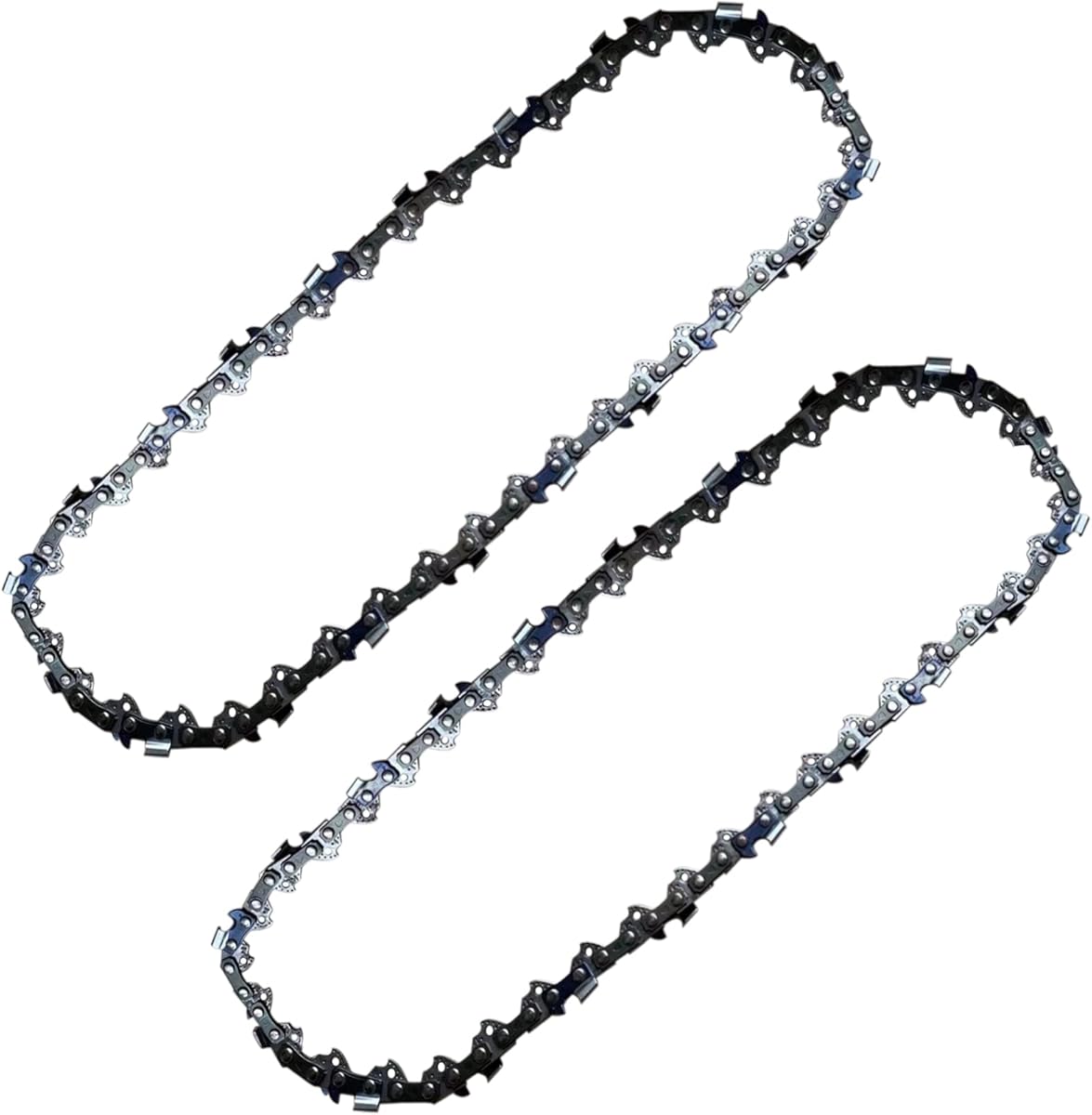
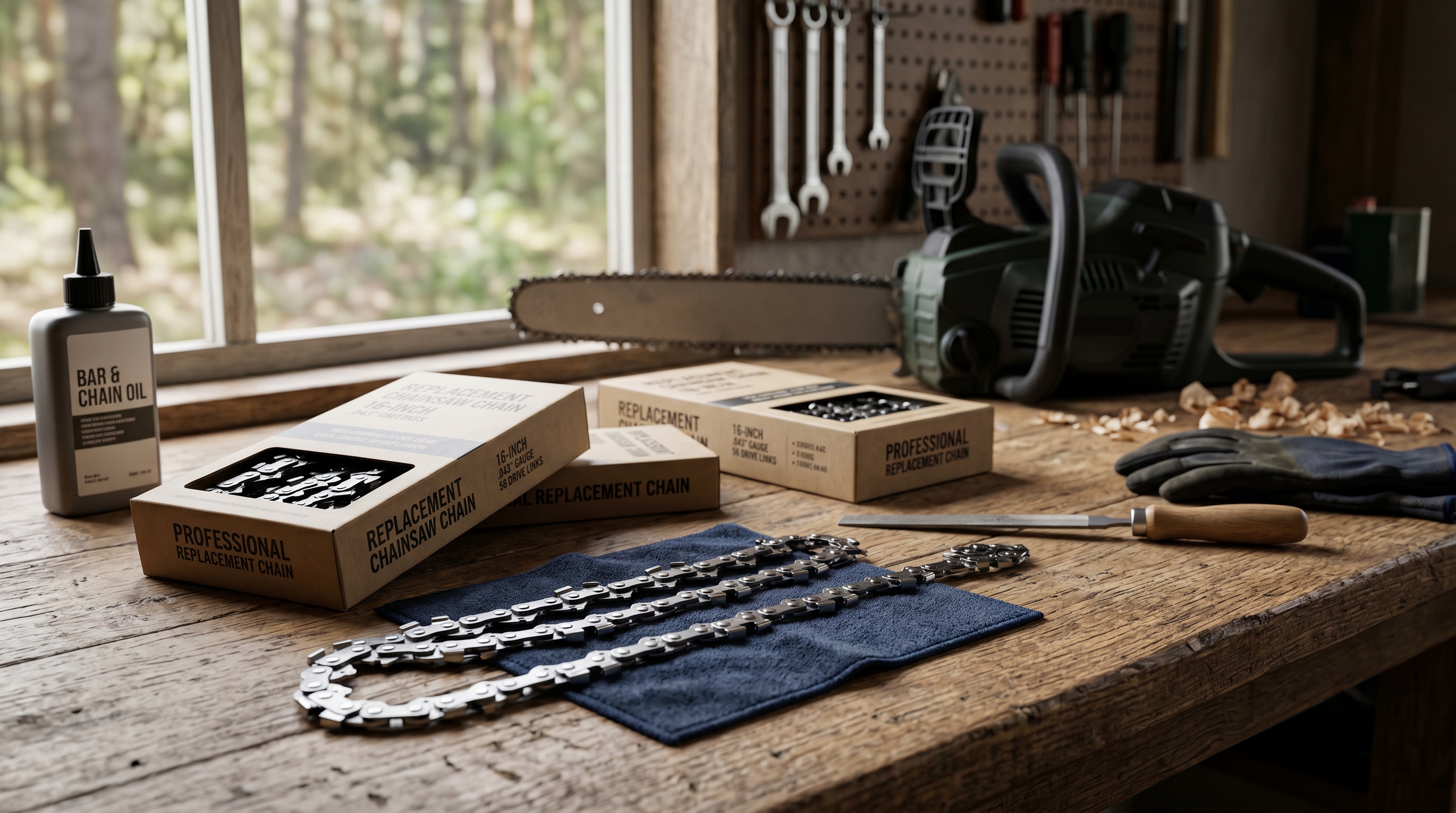
When one chain starts to dull, swap it out and keep working. Sharpen the other later at your convenience. This approach saves time, protects runtime, and helps you avoid pushing a dull chain too long. It also reduces wear on the bar and drive system.
For homeowners, the best replacement chain is usually not the most aggressive option. It is the correct size, the right gauge, a semi-chisel design, and a profile that matches the saw’s intended use. Choose carefully, verify pitch, gauge, and drive links, and your battery chainsaw will cut better, run longer, and stay more enjoyable to use.
Find the right part on Amazon
Check price, stock and fitment — ships direct from Amazon.
Parts