§ Journal · May 28, 2026
Best Value Replacement Chains by Pitch — 3/8 LP vs .325 vs 3/8
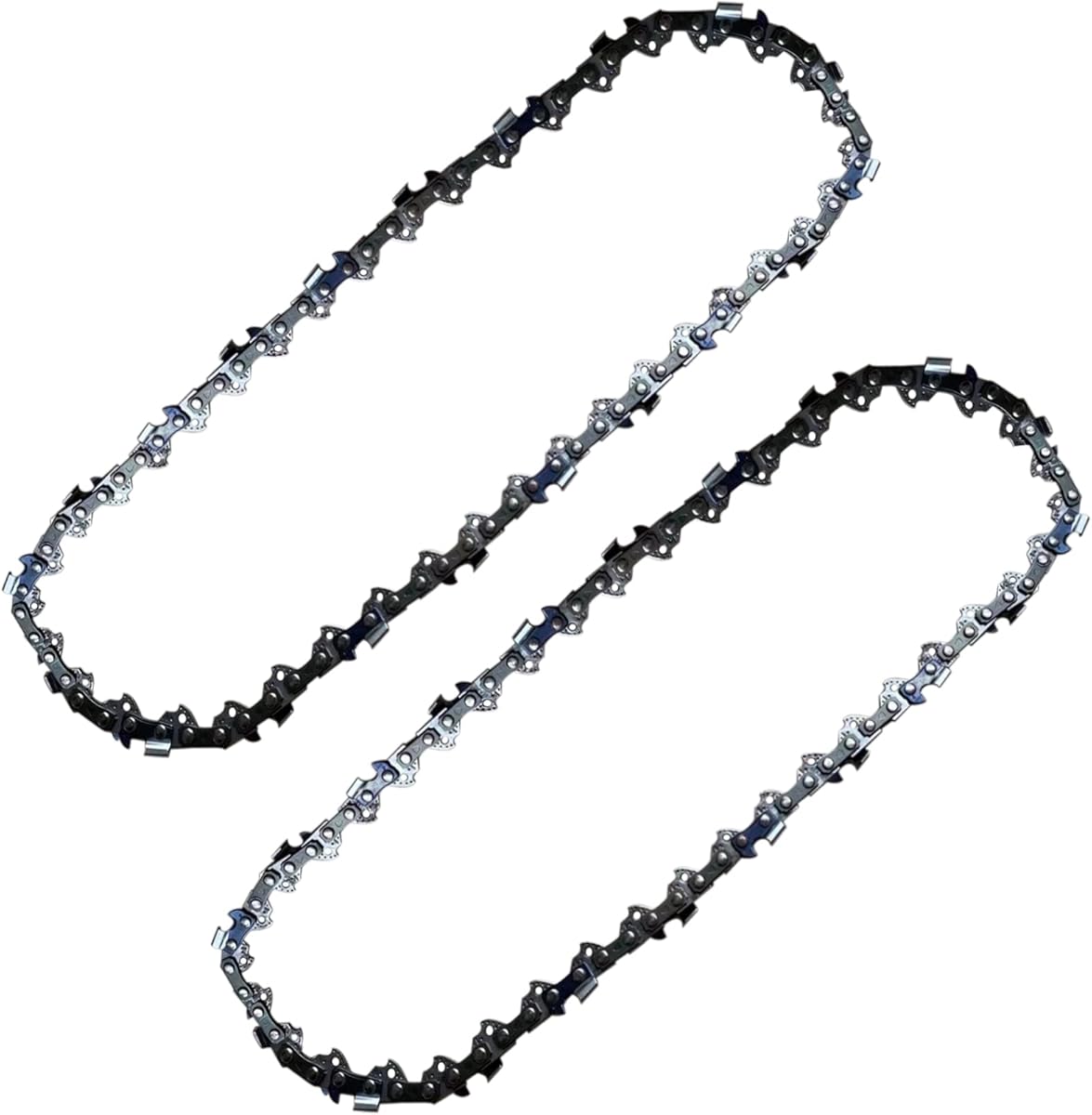
Break down which aftermarket chains offer the best cut quality per dollar for each pitch class. Reference our catalog.
Best Value Replacement Chains by Pitch — 3/8 LP vs .325 vs 3/8
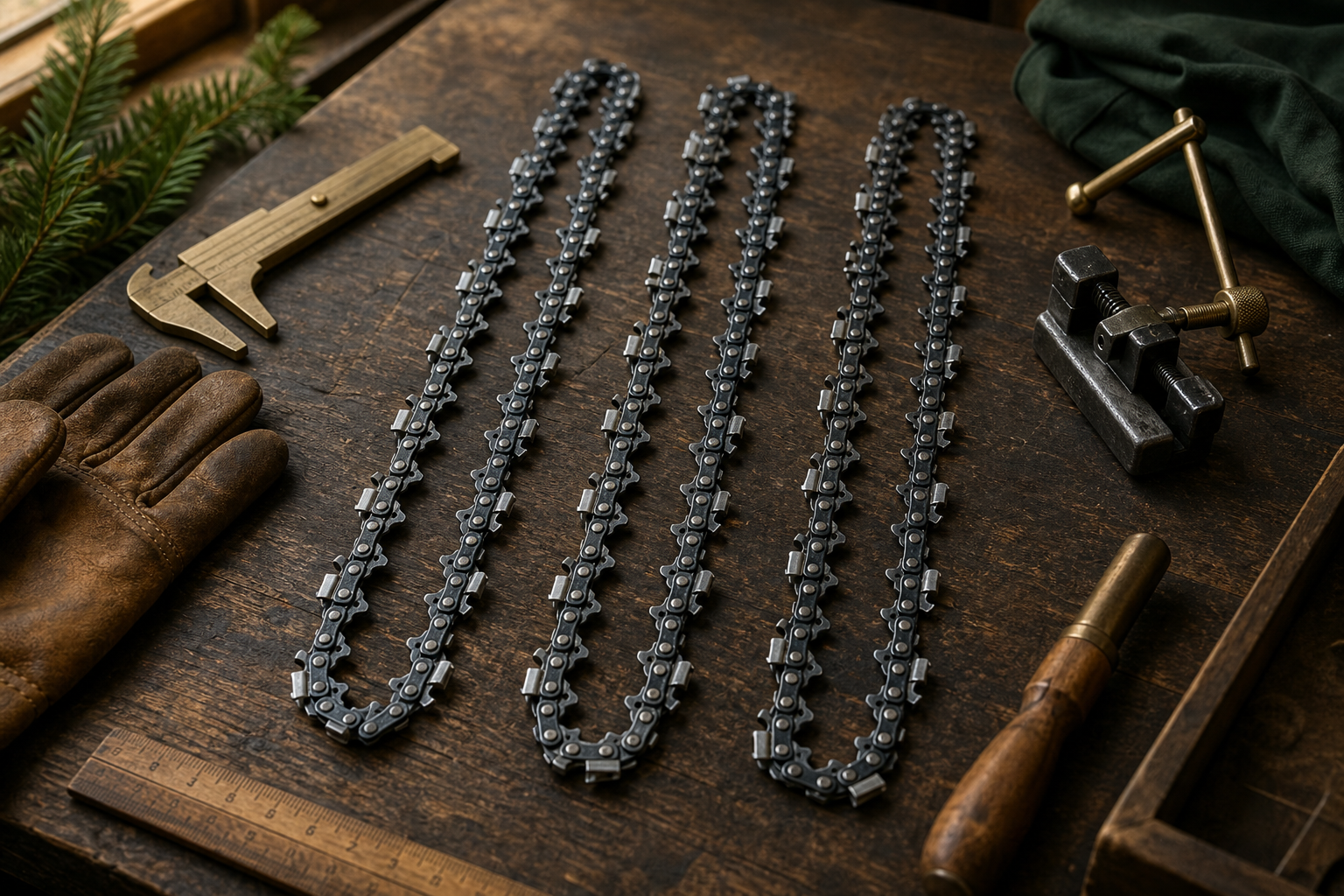
If you’re shopping for a replacement chainsaw chain, the fastest way to waste money is buying by brand name alone. The better approach is to match pitch, gauge, drive link count, cutter style, and bar/application—then compare who gives you the best cut quality per dollar.
For rural homeowners and part-time loggers, the three pitch classes that matter most are 3/8 Low Profile (3/8 LP), .325, and standard 3/8. Each has a sweet spot. A good 3/8 LP chain on a 14–18” saw can be the best value for storm cleanup and firewood bucking. A .325 chain often gives the smoothest all-around performance on mid-size saws. Standard 3/8 still dominates when torque, durability, and faster production matter more than finesse.
Before getting into the comparisons, here’s a quick video reference:
The goal here is not to crown one “best chain” overall, but to break down which aftermarket options usually deliver the best performance per dollar in each pitch class, how they sharpen, how long they hold an edge, and which users they fit best.
3/8 LP: best value for homeowners, light firewood, and small saws
3/8 Low Profile is commonly found on homeowner and farm/ranch saws, battery chainsaws, and lighter gas saws in the 30–45cc range. Typical bar lengths are 12” to 18”, usually in .043” or .050” gauge.
Where 3/8 LP shines
- Low kickback options are widely available
- Easy pulling chain for lower-horsepower saws
- Affordable replacement cost
- Good for limbing, storm cleanup, and occasional bucking
Cut quality per dollar
In this pitch class, the best-value aftermarket chains are usually semi-chisel or “Chamfer Chisel” style chains. They don’t cut quite as aggressively as full chisel versions, but they:
- stay sharp longer in dirty wood
- tolerate homeowner sharpening better
- cost less than premium pro-only chain
- reduce frustration on smaller saws
For most rural property owners, this is the pitch where spending extra on a premium chain often brings diminishing returns. If your saw is wearing a 16” bar and cutting mixed firewood a few weekends a year, a dependable aftermarket 3/8 LP chain in the $15–$22 range often offers better value than a top-tier OEM chain at $25–$35.
Best fitment uses
- 14” bars on compact saws
- 16” bars on common homeowner saws
- 18” bars on stronger battery or small gas saws
Sharpening notes
3/8 LP chains are usually sharpened with a 5/32” round file. They sharpen quickly, which is a plus, but cutter life can go away fast if you over-file. This is one reason value-minded buyers should consider buying two or three chains at once and rotating them instead of trying to squeeze one chain to death.
Best value verdict for 3/8 LP: choose a reputable aftermarket semi-chisel chain with the correct gauge and drive link count; it will usually offer the lowest cost per cord of wood for homeowner use.
.325: the underrated sweet spot for mid-size saws
If you run a 40–55cc saw with a 16”, 18”, or 20” bar, there’s a good chance .325 pitch is your best all-around value option. This pitch has long been popular because it balances smooth cutting, manageable vibration, and decent chain speed without demanding the torque of a standard 3/8 setup.
Why .325 is such a strong value
Compared with 3/8 LP, .325 generally gives:
- stronger cutter chassis
- better stability in hardwood
- smoother tracking on longer bars
- more “professional” cut feel on mid-size saws
Compared with standard 3/8, .325 often gives:
- easier pulling performance on smaller displacement saws
- slightly smoother finish
- less bogging in saws under about 50cc
- lower operator fatigue for casual use
Pricing tiers
This is where value shopping gets interesting:
- Economy aftermarket: around $18–$24
- Mid-tier aftermarket: around $22–$30
- Premium OEM/pro chain: around $30–$40+
For part-time loggers and heavy firewood users, the mid-tier aftermarket .325 chains are often the value leaders. They usually sharpen cleanly, maintain decent chrome quality on the cutters, and cost enough less than premium OEM chain to make stocking spares practical.
Cutter styles
- Semi-chisel .325: best for dirty bark, mixed hardwood, and users sharpening by hand
- Full chisel .325: best for clean timber and faster cutting, but edge life drops faster in dusty conditions
If your cutting routine includes windblown fence-row wood, old hedge, or dirty oak, semi-chisel is often the better dollar-for-dollar choice. If you process clean logs and stay on top of filing, full chisel may return more speed for the money.
Sharpening notes
Most .325 chains use a 3/16” round file, though some variants may differ. The big value advantage here is that .325 tends to be forgiving enough for hand sharpening while still feeling like a major step up from homeowner-grade low-profile chain.
Best value verdict for .325: if your saw supports it, this pitch often delivers the best compromise of speed, smoothness, and chain life per dollar for serious homeowners and light production work.
Standard 3/8: best for torque, bigger wood, and production cutting
Standard 3/8 pitch is the classic choice for larger saws, commonly 50cc and up, especially with 18” to 28” bars. If your work includes bigger hardwood, frequent felling, or multiple cords per year, this pitch usually makes sense.
What you gain with 3/8
- More aggressive cutting character
- Stronger-feeling chain in heavy wood
- Broad aftermarket availability
- Excellent support for pro-grade bars and saws
For saws in the 60cc+ range, standard 3/8 often becomes the best value because it lets the saw work in its ideal power band. On a strong farm or logging saw, stepping down to .325 can leave production on the table.
Best cut quality per dollar
The best-value standard 3/8 aftermarket chains are often found in two camps:
-
Semi-chisel for farm/ranch use
- Better edge retention in rough bark
- Lower sharpening sensitivity
- Typically lower price
- Great for mixed conditions
-
Full chisel for clean wood
- Fastest cutting
- Best if you process a lot of clean timber
- Worth the extra cost if productivity matters
Typical pricing:
- Budget aftermarket 3/8: $20–$28
- Mid-grade aftermarket 3/8: $25–$35
- Premium pro 3/8 chain: $35–$50+
For most rural landowners, a mid-grade semi-chisel 3/8 chain is the practical value winner. For part-time loggers, a mid-grade or premium full chisel 3/8 chain usually pays for itself in faster cut times—provided wood is clean and sharpening discipline is good.
Sharpening notes
Most standard 3/8 chains use a 7/32” round file, though some low-vibration or narrow-kerf versions may vary. If you hand-file in the field, 3/8 is still one of the easiest pro-style chains to maintain, especially if you use a file guide and check raker height consistently.
Best value verdict for 3/8: the stronger the saw and the harder the work, the more standard 3/8 earns its keep.
Sharpening and maintenance: where the real value is won or lost
No chain is a bargain if it gets rocked, overheated, or filed wrong. Chain value is not just purchase price—it’s cost per sharp tank of fuel, cutter life, and how quickly you can get back to work.
Hand filing vs bench sharpening
Hand filing
- Lowest cost entry
- Best for touch-ups in the field
- Works well for homeowners and firewood cutters
- Requires consistency in angle and raker maintenance
Bench grinder
- Faster for restoring damaged chains
- Better for fleets or multiple spare loops
- Easy to remove too much material if used carelessly
For most buyers, the best setup is simple:
- round file in the correct diameter
- flat file for depth gauges/rakers
- file guide
- stump vise or bench vise
- 2–4 spare chains in rotation
Maintenance habits that save money
- Keep chain tension properly adjusted
- Flip the bar regularly
- Clean the bar groove and oil holes
- Dress burrs off the bar rails
- Replace drive sprockets when worn
- Touch up cutters before they get fully dull
A lightly dulled chain can often be restored in a few strokes. A badly dulled chain takes longer, removes more metal, and shortens chain life. That’s why frequent light sharpening is usually the cheapest strategy.
Our picks
From our catalog, these are the replacement-chain categories we recommend by pitch class for best value.
Best value 3/8 LP chain
Our pick: aftermarket 3/8 LP semi-chisel chain, .050 gauge, common homeowner DL counts
- Best for: 14”–18” bars on homeowner and light farm saws
- Why we like it: strong value, forgiving sharpening, good dirty-wood durability
- Typical fitment: many compact Husqvarna, Echo, Craftsman, Poulan, Greenworks, and battery saw applications
- Best price tier: budget to lower mid-tier
If your saw takes 3/8 LP .043 instead of .050, make sure you match the gauge exactly. Pitch alone is not enough.
Best value .325 chain
Our pick: aftermarket .325 semi-chisel chain in .050 gauge for 16”–20” bars
- Best for: 40–55cc saws used for regular firewood cutting
- Why we like it: best all-around balance of smoothness, edge life, and price
- Typical fitment: many mid-size Husqvarna, Stihl-compatible aftermarket setups, Jonsered, Echo, and older farm saws
- Best price tier: mid-tier aftermarket
If you cut mostly clean timber and want faster feed speed, step up to a .325 full chisel version.
Best value standard 3/8 chain
Our pick: aftermarket 3/8 semi-chisel or full chisel, .050 gauge, 18”–24” fitments
- Best for: 50cc+ saws, heavier bucking, and part-time logging
- Why we like it: broad fitment, excellent production potential, strong aftermarket competition
- Typical fitment: farm/pro saws from Husqvarna, Dolmar/Makita, Echo, Jonsered, and compatible large-frame saws
- Best price tier: mid-tier aftermarket for most users; premium full chisel for production cutters
Best sharpening buy
Our pick: complete sharpening kit matched to your pitch
- 3/8 LP: 5/32”
- .325: 3/16”
- 3/8: 7/32”
A good sharpening kit is often a better buy than upgrading from a decent aftermarket chain to a premium one. Edge maintenance matters more than logo prestige.
FAQ
How do I know whether I need 3/8 LP, .325, or 3/8?
Check the markings on your current bar or chain, or look up your saw model and bar combination. You must match pitch, gauge, and drive link count.
Is 3/8 LP the same as standard 3/8?
No. They are not interchangeable. 3/8 LP is a low-profile chain format designed for smaller saws and matching bars/sprockets.
Which pitch cuts fastest?
It depends on saw size and wood. On small saws, 3/8 LP may cut fastest because the saw can pull it efficiently. On mid-size saws, .325 often feels quickest overall. On larger saws, standard 3/8 usually wins.
Is full chisel worth it?
Yes, if you cut clean wood and stay on top of sharpening. If wood is dirty or sharpening is occasional, semi-chisel usually offers better value.
How often should I sharpen my chain?
Touch it up as soon as cutting performance drops, chips turn to dust, or the saw starts pulling to one side. Frequent light sharpening is better than waiting too long.
Should I keep spare chains?
Absolutely. For homeowners, two or three loops is smart. For part-time loggers, keeping several sharpened loops ready reduces downtime and lets you sharpen correctly later.
If you want, I can also turn this into a more catalog-specific version with product tables, exact SKU-style fitment examples, and internal link placeholders so it’s ready to publish on your store.
Find the right part on Amazon
Check price, stock and fitment — ships direct from Amazon.
§ Parts